Category: Words (page 1 of 1)

My Mother’s Hands

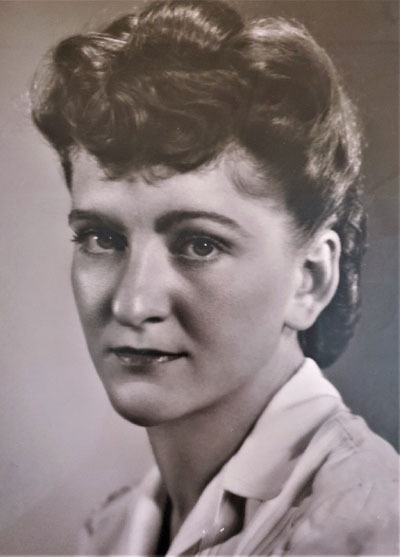
I strive to imagine them, these hands of my mother’s.  I look to her portrait for help.  I recently took it out of storage and its protective layers of wrapping. I wanted to show my son his grandmother, whom he was asking about.  Our conversation had turned to times and places where winter was truly winter, spring an explosion missed from one week to the next, summer a boundless string of bike riding, popsicles and beach days before the wheel would turn back to autumn and a final, effulgent spray of colour.  That is where my mother belonged. And where I belonged too.  For a time.

Jacqueline, my mother, stares out, wistful-eyed, head tilted slightly downward, with the merest trace of a smile on her lips.  And always, at this point, my perennial question: Is that faint smile what I wish to see rather than what is? Her gaze is shy – not timid, for I know her to have ridden powerful horses fearlessly, much to my less-assured father’s anguish and damaged pride. I suspect that she agreed to the portrait-taking to please someone, likely Jean-Jules, as they were courting at the time.  Of course, the portrait tells me nothing of her hands.

Often enough, at nightfall, on turning off the light after checking the set of the alarm, I return to the task of imagining her – imagining her when, in fact, I should be remembering her: the fragrance of her skin in the crook of her neck, a murmuring voice, the fall of hair, chestnut dark; a way of walking, the rougher wool fabric of a winter skirt, a bare leg in summer or bed, a breast to suckle and, of course, hands: hands to hold, lift, console, caress, ease, defend, scold; hands offered in play, finger by finger, for me to grasp; hands to button up my jumpsuit or strip me bare to lower me into a bath, straighten a blanket, stroke me goodnight; hands with which to feed me, help me cross the street and hold a pencil to have me form my first letters.

But of course, I cannot remember: eyes tightly shut or wide open into a darkness broken only by the faintest of light that traces the room’s closed blinds, this remembering produces naught but a void that cannot be populated. Imaginings thrown into it find no purchase, neither hook nor fault of face for them to latch onto, no accidents of surface upon which life can cling and memories take root and rise, defying gravity and the great abyss in which absence dwells.

My mother clung to her last days, I’m told, fought to cling, I’m assured.  But in the real world, which is not that of my imaginings, she fell: neither the birth-bed nor the hospital one into which she died could hold her for the sum of my first seven days. How then, by what consoling magic, could I imagine my mother’s hands?

š ›October 2020

The Architecture of Happiness (for a Seven-Year Old)

Let me tell you of the nature of happiness for a seven-year old. Uncomplicated and utterly inexpensive, it goes something like this:

Child leaves the table to go to the bay window, sticky-chinned and still chewing on the last piece of the two allotted slices of breakfast toast (jam and peanut butter).

Child looks out, transfixed: a cerulean sky and, on the ground, snow a shimmering constellation of blessedness, light and deep all at once, and bright enough to force a squint.

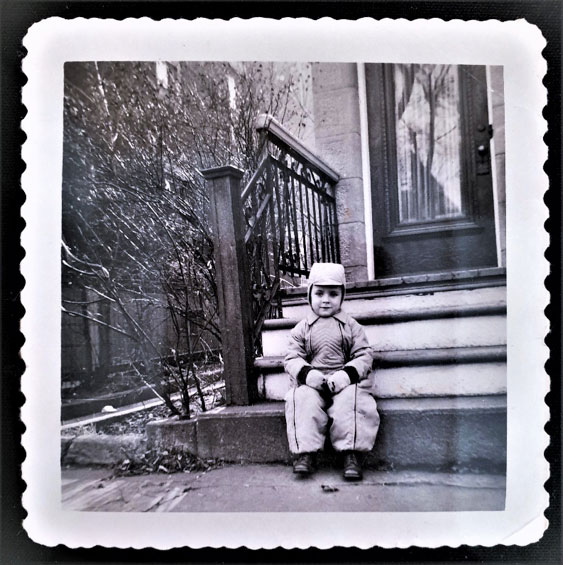
Child finds clothes in order to dress: yesterday’s garments are perfectly acceptable.  Shirt buttons need not align, pants can be skewwhiff and socks unmatched – only thick.  Shoes can stay under the bed, unwanted summer creatures that they are; but socks and over-socks, ski pants, jackets, mittens, a hat and a scarf and boots too, tight at the ankle to keep out the snow, are a must. (M’amie will stuff parka pockets with tissues for a snotty nose, so no need to be concerned on that account.  However, a purloined jam biscuit or two will come in handy later).

Child listens to admonitions and nods: warnings about the danger of the perishing cold, the need to stay warm and to keep dry; about not sucking the metre-long roof icicles, nor going walking on the river ice to check that the ducks have gone (or listen out for the rushing water flow beneath, while stamping the surface to see how thick it has grown overnight); or, heaven forbid, go further out to the railroad to throw snowballs at the slow freight trains or stick your tongue on the track like the ruffian boys next door so wickedly suggested once.

Child goes to the barn to fetch the sled.  It takes a while to traverse the five metres of drift separating the kitchen door from the barn door.  Footprints are well worth studying along the way: it’s mark-making of a grand order.  There may even be need for an angel or two. And then the heavy barn door takes some pushing open – enough anyway to drag out the short sled rather than the big one used when three of four want to race downhill together. Then the ladder must come out as well (trickier that, because it must be dragged without mishap or noise past the kitchen window to avoid detection).

Child ever so gently leans the ladder against the low side of the house roof.  The other side of the house, the high side, is two stories high and well beyond reach.  Common sense prevails, even at seven years of age.  Ladder in place, it’s time to pull the short sled up onto the roof, one rung at a time.

Child carefully positions the sled on the roof apex at the far side of the house, facing the street.  From the roof, there is a fall of two metres to the snowy slope below that, after a few metres, cliffs off onto the steep road, its surface hard-packed ice all the way down to the river, one hundred metres away: this is the speed strip, reached only if the sled is first guided safely and at speed through the gaps between the poplars that grow in a row at the edge of the property.

 Child runs the length of the roof to throw himself full pelt onto the carefully positioned sled.  Momentum is needed to fly off the roof edge and clear the eaves in a graceful, silent airy arc, all the way down to the explosion of swishing white powder that fills eyes, nose and mouth, flakes melting on the tongue or hanging on to eyelashes.  This is the trickiest part of the happiness formula: the run must be quick, not only for reasons of physics associated with the launch, but for the child to be well out of earshot and a good way down the slope before M’amie, frightened out of her skin by the thumping of boots on the roof, comes tearing out of the kitchen to put an end to the joy so hardly fought for.

In the moment of flight, the child knows ecstasy, the thrill of the weightless fall and the soft thud that signals the return to earth (but a kind, embracing earth).  He knows gathering speed and the brush of wind on his cheeks, the tug on the rope or the press of the boot to steer the sled left or right – the joy of the body that responds, leaning now this way and now that.

He knows too the different sounds that the snow makes under the sled: a cotton-wooled whoosh in the drift and the harsher, crackle of the sled wood when surfing the ice.  Most striking of all, he knows the crystalline silence that rises when the sled comes to a halt at the end of the run, every centimetre of momentum used up and drained, as he sits still, transfixed, the only distractions the beat of his heart in his ears, the cracking of frozen branches above and the swish of his moving limbs when they rub against his parka.

He knows that snow has a taste. That icicles have a taste. That sucked mittens have a wooly or leathery taste. That frozen snot has a taste, as do the broken jam biscuits dragged out of deep pockets, eaten among the brittle-frozen shore reeds while looking for ducks and tracing cracks in the filigree ice to see the water rise through them and form patterns around snow boots, while air bubbles lazily pop to the surface. And then there is the turning for home, and once there, pumpkin and turnip soup with bread and butter, and warmth and the sleepiness that blurs the child’s eyes roaming over a picture book and closes them, and the noise of M’amie in the kitchen and in the nostrils still, trapped in some deep follicle but released now, the smell of the frozen river and the world below the ice.

August 2020

Madeleine’s Madeleines

Madeleine Paulmier labours at her kitchen bench, producing, among other things to be sure, small cakes for her master Stanislaus I, the exiled king of Poland.  Or is she instead in the employ of Cardinal Paul de Gondi (better known under his pen name of Cardinal de Retz, the memoirist of French fame), in the mid-1600s?

For whom she laboured matters little in the end: the scent is cold and the track buried deep. What does matter are the shell-like creations she left us: the sugar-dusted, honeyed madeleines that, though humble of size and appearance, thrill the tastebuds like Easter morning after a long, grey Lent.  Moments of grace and light, all sins forgiven.

Madeleine: would you have clapped floured hands with pleasure at the thought of the fame that awaited your simple treat?  Or would you have shrugged your shoulders and muttered something about ‘not talking piffle’ or ‘needing to get on’?  But here is the implausible truth of it: your modest cake not only tumbled, summer-warm golden, down centuries-long culinary staircases to our very own ovens and plates: along the way, it also lodged itself into the preternaturally delicate memory of a neurasthenic child who would, come later years, glorify you in his remembrance of things past.

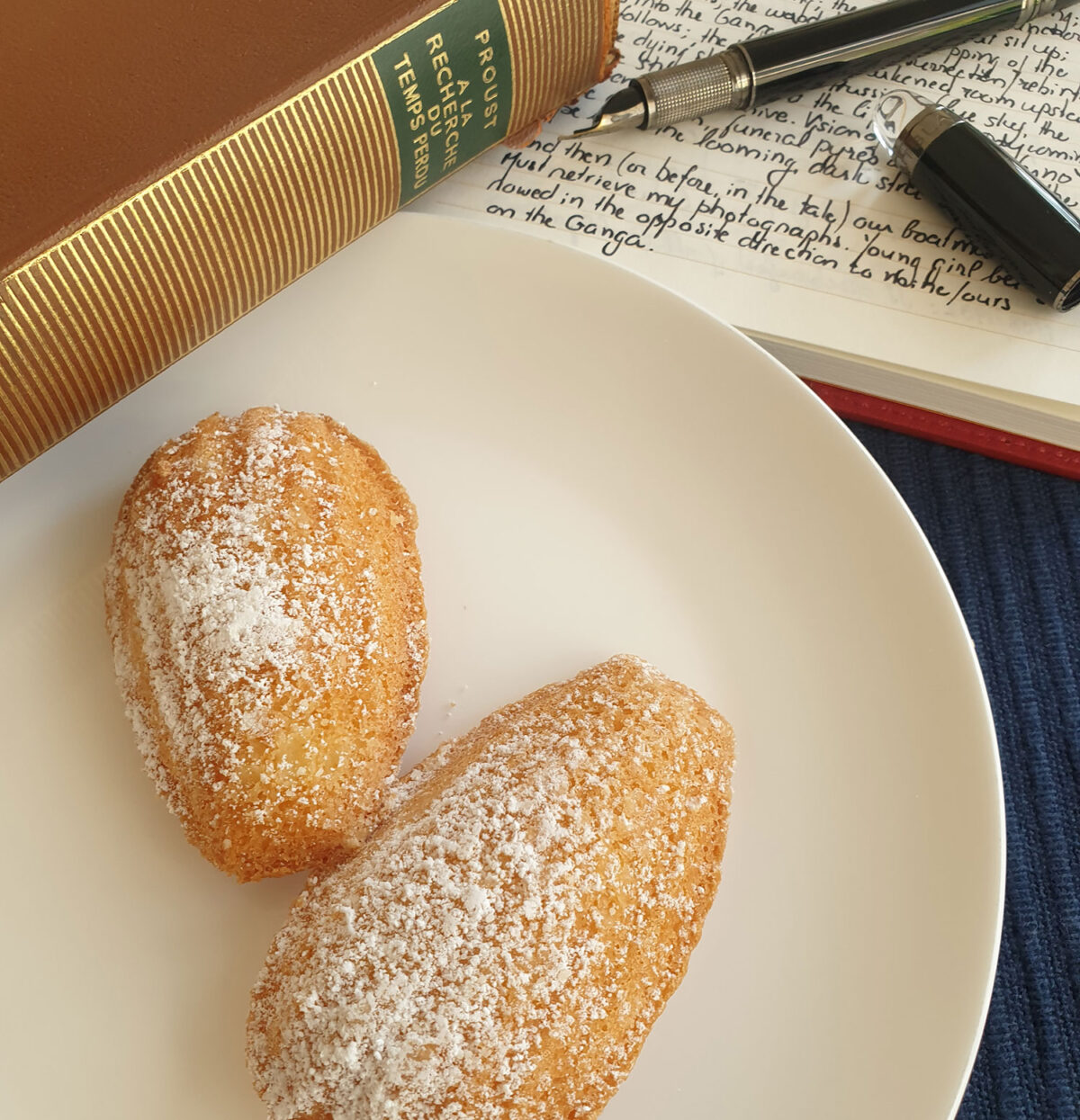
Here, then, lies our impossibly delightful dilemma.  What should we be gladdest of: Marcel Proust’s madeleine-inspired recollections on the passing of a life, rendered in half-page sentences and detail that would make a pointilliste painter proud? Or Madeleine Paulmier’s gift of a three-egg, caster sugar, orange rind, vanilla, flour and baking powder confection, so quick to rise and yet so swift to perish if one’s attention should wander and the oven timer fail?

On my kitchen bench: twelve scorched madeleines, deep caramel of complexion, headed for the bin; twelve paler madeleines that will procure some pleasure in this week’s office morning tea; and twelve perfect madeleines, this evening’s joy at the meal’s close, when legs stretch under the table and the fragrance of tea casts its quietening spell.